
Remember when trade wars were about steel and soybeans? Cute times. Now we’ve leveled up. The new battleground isn’t factories or farmland — it’s what’s buried under them.
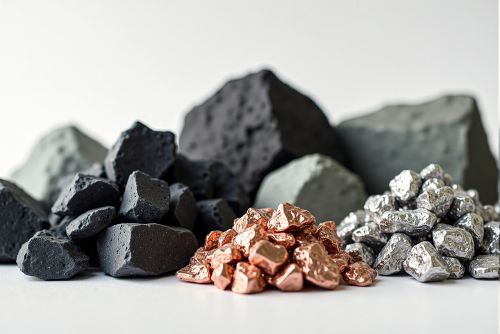
Rare-earth minerals. The stuff that makes everything from your phone’s battery to fighter jets to the chips that let AI pretend it has a soul.
And here we go again. President Trump, never one for subtlety, just threatened a “massive increase” in tariffs on Chinese goods and canceled his planned meeting with Xi Jinping. His reason? China’s getting cheeky about cutting off access to those rare-earth elements.
In plain English: Beijing’s hinting it might stop selling the minerals we need to make the tech we depend on. That’s not just a trade spat — that’s pulling the plug on America’s power cord.
China’s Got the Dirt (Literally)
See, China dominates the rare-earth market. They control about 70% of global supply, and not by accident. For decades, the U.S. let its domestic mining industry rust while China went all-in on extraction, processing, and refinement.
Now, they’re using it like leverage in a poker game — except the U.S. is sitting there with a losing hand and a nervous smile. As one analyst put it, Beijing’s new export restrictions are “a really strong weapon.” No kidding. It’s like holding all the oil in 1973 — but with a TikTok account.
The Markets Panicked — But There’s a Twist
Stocks sank after Trump’s comments. The Dow dropped, the S&P followed, and Wall Street collectively gasped, “Wait, we still need China?”
But here’s the irony: long-term, this could actually light a fire under one of America’s most overlooked sectors — rare-earth mining and processing. If China wants to weaponize its monopoly, the U.S. and its allies have no choice but to rebuild supply chains at home or somewhere friendly.
That means the real opportunity isn’t in panicking — it’s in positioning.
The Smart Play: Own the Dig, Not the Drama
You don’t have to be a geopolitical genius to see where this is headed. The U.S. is already throwing money at companies trying to secure “strategic minerals.”
One name worth knowing: MP Materials (MP) — the only large-scale rare-earth miner in the United States. Their Mountain Pass mine in California supplies critical components for everything from electric vehicles to missile systems.
Here’s the kicker: MP sells its ore to China for processing. So if Washington decides to pour subsidies into reshoring that step, MP stands to gain big. They’re already partnering with the Department of Defense and General Motors to build domestic refining capacity — exactly the kind of “national security meets capitalism” story investors love.
MP shares have been beaten down this year as markets obsessed over AI and ignored boring old dirt. But dirt’s about to get interesting again.
The Bigger Picture
Forget the noise about tariffs and tweets. What’s happening is a structural shift — a reordering of global supply chains. The world’s waking up to the fact that you can’t build high-tech economies on minerals controlled by a rival superpower.
That’s why the next decade won’t just be about chips and software — it’ll be about who controls the ingredients. The 21st century’s oil isn’t black. It’s dusty, metallic, and sitting in the ground waiting for someone smart enough to dig it up.
The Punchline
So here’s the moral: while politicians play chess with tariffs, investors should be watching the board underneath — the one made of lithium, cobalt, and rare earths.
Gold had its moment. Silicon had its run. Now dirt is destiny.
And in a world where the next war might be fought over magnets instead of missiles, the smartest play might just be the company holding the shovel.